


8 Common Mistakes When Using Lifting Equipment in Malaysia (And How to Avoid Them)
In industries across Malaysia, lifting equipment is essential for improving workplace safety and efficiency. From warehouses and factories to logistics centers, equipment like lifting trolleys, hoists, and cranes help employees lift, move, and position heavy materials safely. However, improper use of lifting equipment can lead to accidents, injuries, and costly downtime. Understanding the common mistakes can help businesses prevent incidents, protect employees, and maintain smooth operations. Here are 8 common mistakes when using lifting equipment in Malaysia and how to avoid them.
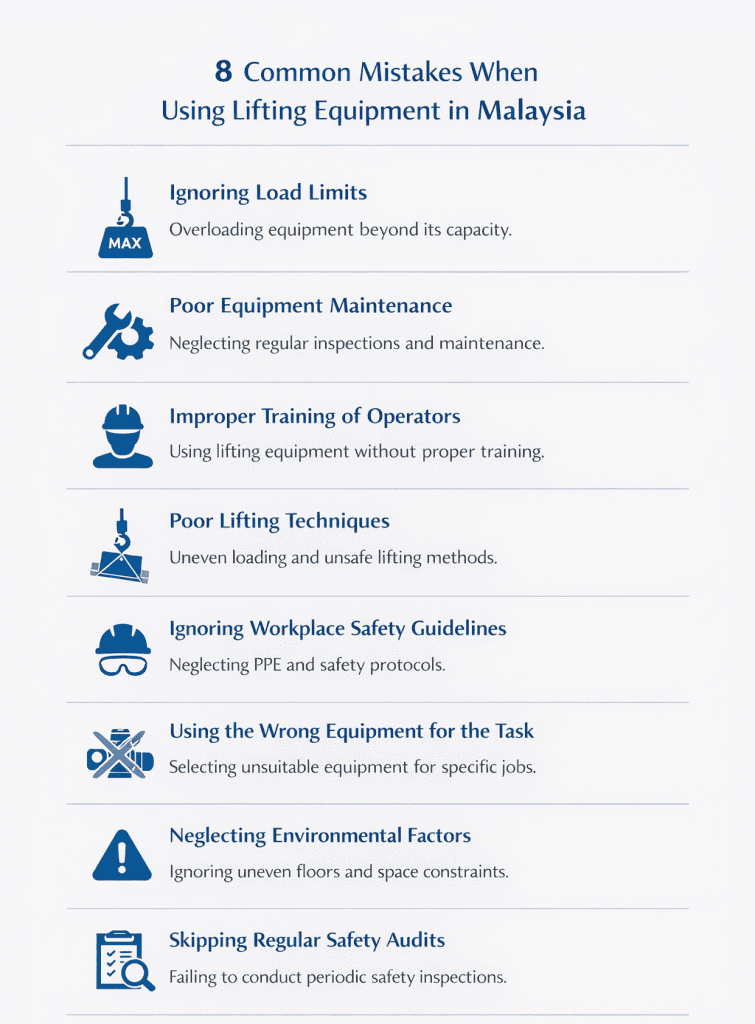
1. Ignoring Load Limits
One of the most frequent mistakes is exceeding the lifting capacity of equipment. Overloading not only stresses the mechanical components but also increases the risk of tip-overs or dropped loads, potentially causing serious injuries to workers and damage to materials. Many operators underestimate the importance of load limits, assuming their equipment can handle heavier weights.
How to avoid:
- Always check the equipment’s load capacity before lifting.
- Use load charts or manuals provided by manufacturers.
- Train employees to strictly follow weight limits.
2. Poor Equipment Maintenance
Neglecting regular inspections and maintenance is a common mistake when using lifting equipment in Malaysia. Worn-out components, malfunctioning brakes, or broken hoists can fail unexpectedly, leading to accidents, injuries, and costly downtime. Many businesses overlook scheduled maintenance, which can allow minor issues to turn into major safety hazards over time.
How to avoid:
- Implement a routine inspection and maintenance schedule.
- Replace damaged or worn-out parts immediately.
- Keep detailed maintenance logs for all lifting equipment.
3. Improper Training of Operators
Using lifting equipment without proper training is a major safety hazard. Operators who are not trained may not know how to handle the equipment correctly, respond to emergencies, or recognize potential hazards. Lack of knowledge can result in misuse, increased accidents, and decreased operational efficiency.
How to avoid:
- Provide formal training for all employees operating lifting equipment.
- Include practical exercises and safety protocols in training.
- Refresh training regularly to ensure employees stay updated with best practices.
4. Poor Lifting Techniques
Even with mechanical aids, incorrect lifting techniques can create hazards. Uneven loading, jerky movements, or improper attachment of loads can stress the equipment and increase the risk of accidents. Many operators overlook proper handling methods, which can compromise both safety and efficiency.
How to avoid:
- Load materials evenly and secure them properly.
- Lift and move loads slowly to maintain control.
- Use appropriate attachments for different types of materials.
5. Ignoring Workplace Safety Guidelines
Many accidents happen because operators neglect basic safety protocols when using lifting equipment in Malaysia, such as wearing personal protective equipment (PPE), checking floor conditions, or maintaining clear paths for movement. Ignoring these rules increases the likelihood of workplace incidents and can disrupt overall workflow.
How to avoid:
- Ensure operators always wear PPE, such as gloves, helmets, or safety shoes.
- Keep walkways and work areas free from obstacles.
- Follow Malaysian occupational safety regulations.
6. Using the Wrong Equipment for the Task
Selecting the wrong type of lifting equipment can reduce efficiency and increase safety risks. For instance, using a manual trolley for extremely heavy industrial loads may strain both the worker and the equipment, causing accidents and equipment damage. Matching the right tool to the task is crucial.
How to avoid:
- Match equipment type to the load, lifting height, and working environment.
- Consult suppliers like Cadbon Venture for expert recommendations.
- Consider versatile equipment that can handle multiple tasks.
7. Neglecting Environmental Factors
Environmental factors such as uneven floors, space constraints, and nearby obstacles can significantly affect the safe use of lifting equipment in Malaysia. Ignoring these factors may lead to equipment instability, collisions, or dropped loads, putting both workers and materials at risk.
How to avoid:
- Assess the working area before performing lifting operations.
- Ensure floors are even and free of debris.
- Maintain safe distances from other equipment and personnel.
8. Skipping Regular Safety Audits
Many businesses assume that once equipment is in use, it’s automatically safe. Skipping safety audits allows small issues to go unnoticed, which can escalate into major hazards. Regular checks ensure that both equipment and operator practices comply with safety standards.
How to avoid:
- Conduct regular workplace safety audits.
- Check equipment condition, operator practices, and adherence to safety protocols.
- Address any issues immediately to prevent accidents.
Why Choose Cadbon Venture
Choosing the right supplier for lifting equipment is crucial to ensure safety, reliability, and efficiency in your workplace. Cadbon Venture Sdn. Bhd. has established itself as a trusted provider of lifting solutions in Malaysia, offering high-quality equipment and expert support tailored to diverse industrial needs.
Reasons to choose Cadbon Venture include:
- Extensive experience – Years of expertise in material handling solutions across Malaysian industries.
- Wide range of products – From portable lifting trolleys to hoists and ergonomic lifting systems.
- Trusted brands – Authorized distributor of reputable brands such as TAWI and DALMEC.
- Professional support – Skilled technicians provide installation, maintenance, and technical guidance.
- Customizable solutions – Equipment can be tailored to specific lifting, load, and workflow requirements.
- Serving multiple industries – Solutions trusted by manufacturing, logistics, packaging, and engineering sectors.
With Cadbon Venture, Malaysian businesses can improve workplace safety, enhance operational efficiency, and rely on durable, high-quality lifting equipment.
Conclusion
Using lifting equipment correctly is crucial for workplace safety and efficiency in Malaysian industries. Avoiding mistakes such as overloading, poor maintenance, improper training, and neglecting safety protocols protects employees, reduces downtime, and improves productivity. By investing in high-quality lifting equipment and following best practices, businesses can ensure safer, more efficient operations.
Frequently Asked Questions (FAQs)
What types of lifting equipment are available in Malaysia?
Lifting equipment in Malaysia includes portable lifting trolleys, hoists, cranes, vacuum lifters, and ergonomic lifting systems suitable for warehouses, factories, and industrial operations.
How do I choose the right lifting equipment for my workplace?
Consider factors such as load capacity, lifting height, mobility, attachments, and the type of materials being handled. Choosing the right equipment ensures safer and more efficient operations.
What are the benefits of using lifting equipment in Malaysia?
Using lifting equipment improves workplace safety, reduces the risk of injuries, enhances operational efficiency, and allows materials to be lifted and moved with minimal physical strain.
How often should lifting equipment be inspected or maintained?
Regular inspections and maintenance should be carried out according to the manufacturer’s guidelines, typically before and after use, and as part of scheduled preventive maintenance to ensure safety and longevity.
Why should I choose Cadbon Venture for lifting equipment in Malaysia?
Cadbon Venture offers high-quality lifting solutions, trusted brands like TAWI and DALMEC, professional technical support, customizable options, and years of experience serving various Malaysian industries.
Disclaimer:
The information provided in this article is for general guidance and informational purposes only. While we strive for accuracy, Cadbon Venture Sdn. Bhd. makes no guarantees regarding the completeness or reliability of the content. We accept no responsibility for any errors, omissions, or outcomes resulting from its use. For advice tailored to your specific circumstances, we recommend consulting with a qualified professional or contacting us directly. Explore our services to discover how we can support your business needs.